The direct answer
What we recommend
Choose mini LED lights by the measured lighted length and the surface you are covering—not light count alone. Green wire is usually best in foliage, brown wire blends into trunks and branches, and white wire suits pale trim or flocked greenery. Then match the emitted color, spacing, outdoor rating, and manufacturer connection limit to the project.
Key takeaways
- Compare lighted length and total length, not only the number of bulbs.
- Use green wire in foliage, brown wire on bark, and white wire on light surfaces.
- Four-inch spacing looks denser than six-inch spacing over the same distance.
- Keep every connected set within the product's stated end-to-end limit.
- Use outdoor-rated products and protected connections for exterior displays.
Compare products from this guide
Check the listed contents and available options for the lights you choose.
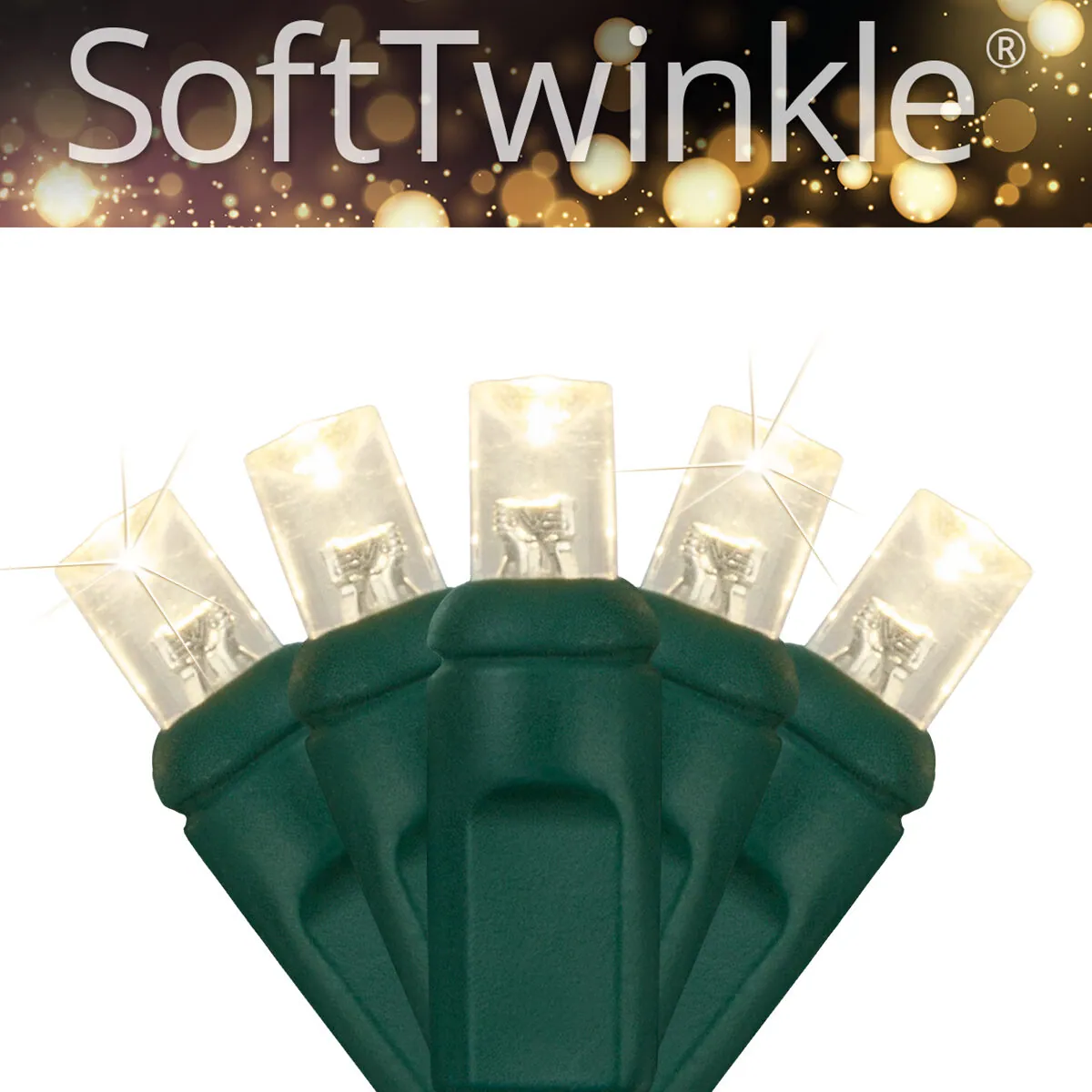
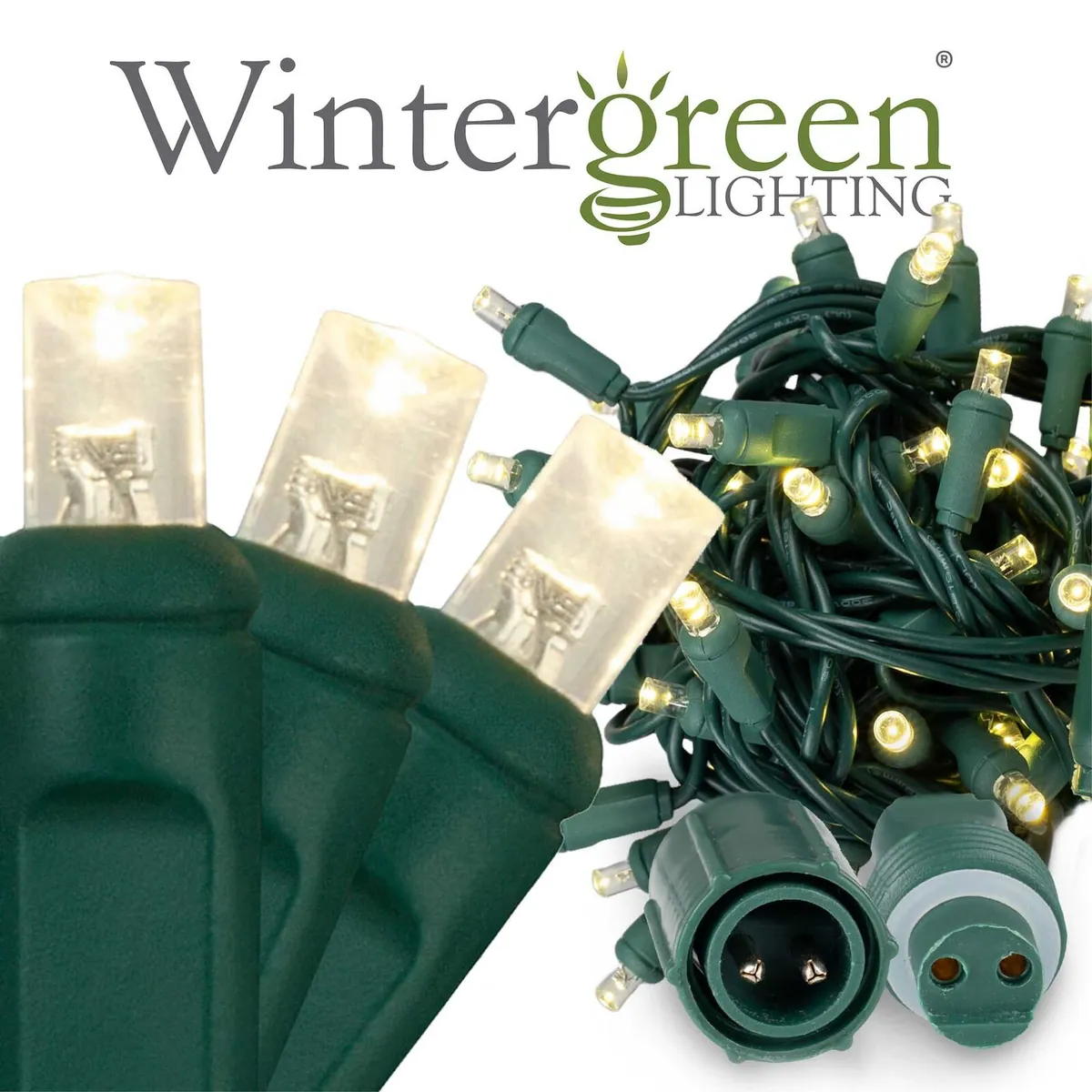
50 5mm Warm White WeatherPRO TM Commercial LED Lights, Green Wire, 4" Spacing
Includes 1 light set
$17.99
View product & options →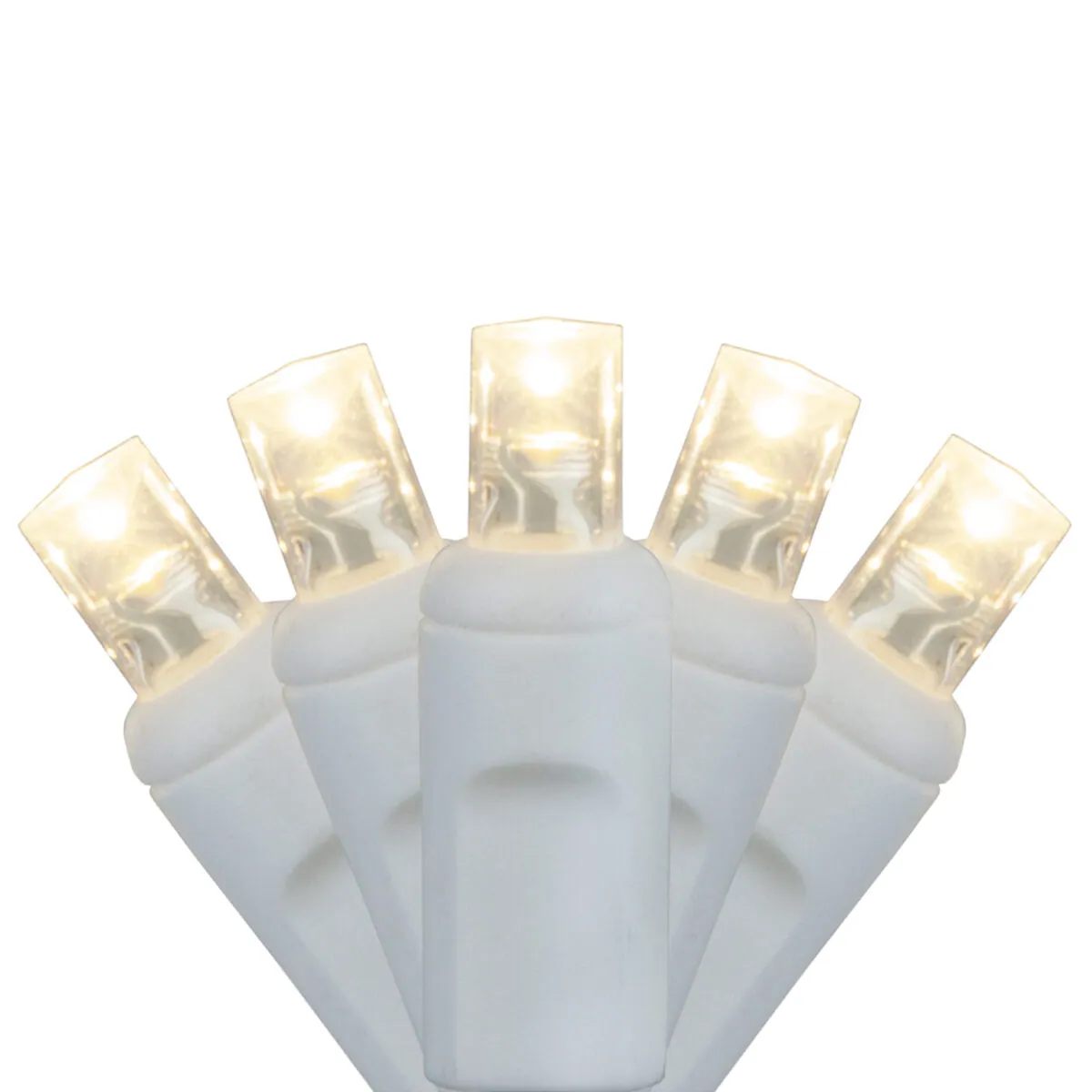
Steady or SoftTwinkle: choose the effect before the length
Steady lights provide constant illumination. SoftTwinkle lights gently pulse independently. These are different product designs, not two selectable modes on every strand. Keep the same effect and product family along a continuous feature when you want a consistent look.
Compare two warm white, green-wire options: WG-64509 has 70 SoftTwinkle lights, 4-inch spacing and a 23.7-foot total string length. WG-65914 has 50 steady WeatherPRO lights, 4-inch spacing and a 17-foot total string length. The WeatherPRO set needs power adapter WG-19526, sold separately; the SoftTwinkle set has a standard fused plug. Do not mix their connector systems.
A measured comparison, including the required parts
A 70-light set has 69 spaces between bulbs. At 4 inches per space, WG-64509 provides 23 feet from first bulb to last. The 49 spaces on WG-65914 cover 16 feet 4 inches. Total string length also includes unlit lead and tail wire, so use the lighted distance for the visible outline.
For a 20-foot straight lighting path, one WG-64509 has sufficient lighted length if you plan where the remaining length will run. One WG-65914 does not cover that path. For a wrapped feature, measure the full wrapping route instead. Never cut these sealed mini sets to fit.
- Start with the selected light set and its required power adapter, if any. Compare the cost of the complete setup.
- An outdoor timer is optional. It controls scheduling; it does not change a steady set into SoftTwinkle or replace an adapter.
- Buy mounting clips and extension leads only after confirming surface, environment, connector and electrical ratings.
Start with the measured coverage
Two 50-light strings can cover different distances because socket spacing, lead length, and tail length vary. Measure the actual wrapping or outlining path and compare it with the listed lighted length before calculating set quantity.
For trees and greenery, include the extra distance created by wrapping around branches or trunks. A straight-line measurement will understate the material required for a spiral wrap.
Choose spacing for the visual density
Closer spacing creates a brighter, more concentrated appearance and uses more lights over the same distance. Wider spacing covers more distance with the same light count. Keep spacing consistent across adjacent visible sections.
- 2.5 to 4 inches: dense accents and fuller greenery coverage
- 5 to 6 inches: balanced coverage for many trees and garlands
- Wider spacing: lighter visual density and longer coverage per set
Confirm the complete electrical specification
LED sets are not automatically interchangeable. Confirm voltage, plug or adapter requirements, steady or twinkle operation, replaceable-bulb details, and the maximum connected-set limit printed for that product family.
Quick comparison
| Surface | Common wire choice | Planning priority |
|---|---|---|
| Evergreen foliage | Green | Lighted length and connection limit |
| Tree trunk or bare branches | Brown | Wrap path and spacing |
| White trim or flocked greenery | White | Wire visibility in daylight |
| Mixed-color feature | Match the feature | Keep one product family together |
Straight answers
Frequently asked questions
How many mini LED Christmas lights do I need?
Measure the complete lighting path, including every spiral around trunks or branches, then divide by the product's listed lighted length. Add a modest allowance for routing and transitions without exceeding connection limits.
Is a 50-count string always the same length?
No. Bulb spacing, lead wire, and tail wire can differ. Use the listed lighted length and total string length for an accurate comparison.
What wire color should I choose for mini lights?
Green usually disappears into foliage, brown blends into bark and branches, and white is less visible against white trim, pale surfaces, or flocked greenery.