The direct answer
What we recommend
LED Christmas lights are the practical choice for most new residential rooflines because they generally use less power and make larger displays easier to plan. Incandescent bulbs can provide a traditional appearance, but their higher per-bulb wattage reduces how many bulbs can share a run. Compatibility and manufacturer limits still control every installation.
Key takeaways
- TX Merry Lights recommends LED for most new C9 roofline systems.
- Compare actual product wattage rather than relying on technology labels alone.
- Do not mix visibly different whites or finishes on one connected line.
- Keep exact replacement bulbs for the installed product family.
Why LED is usually the new-system choice
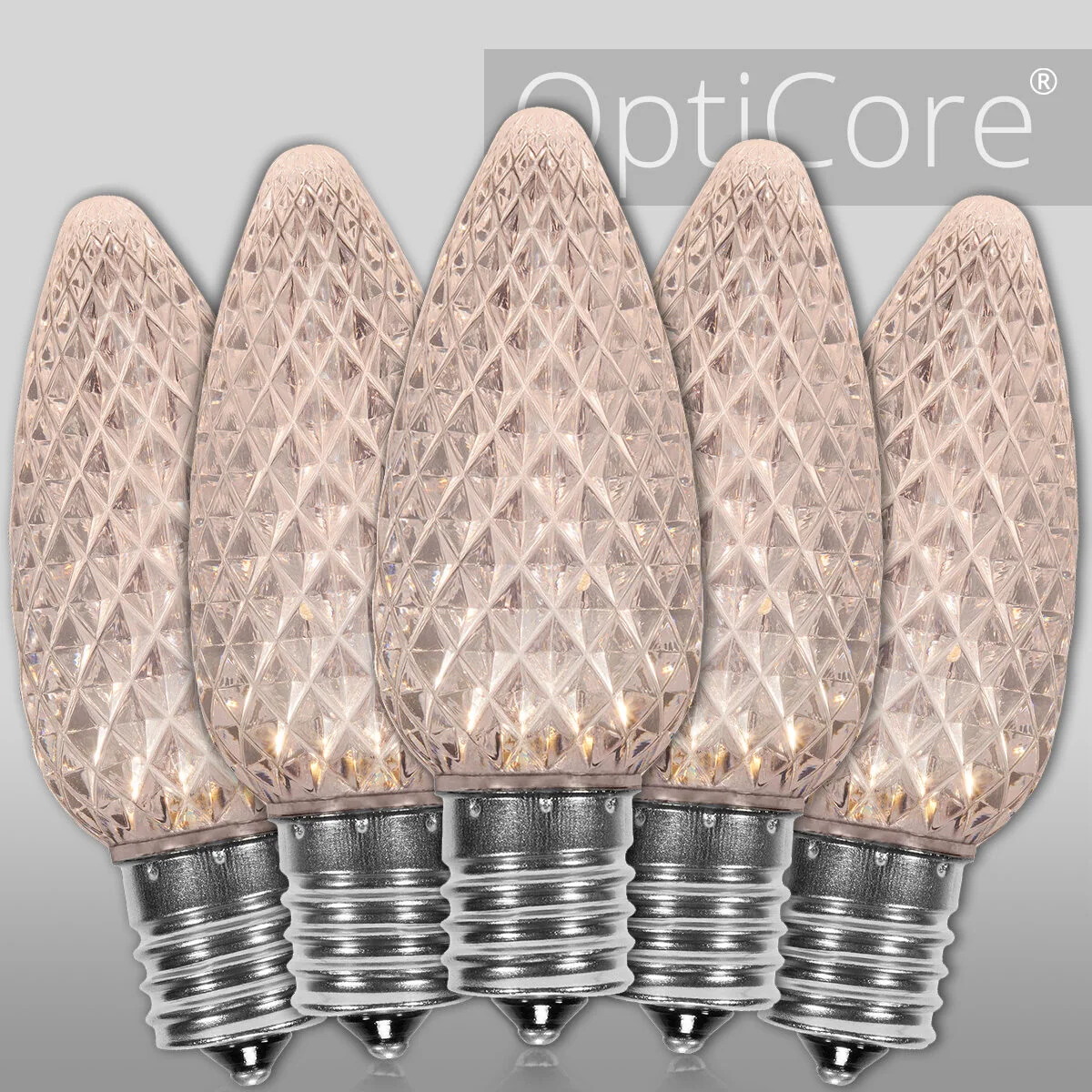
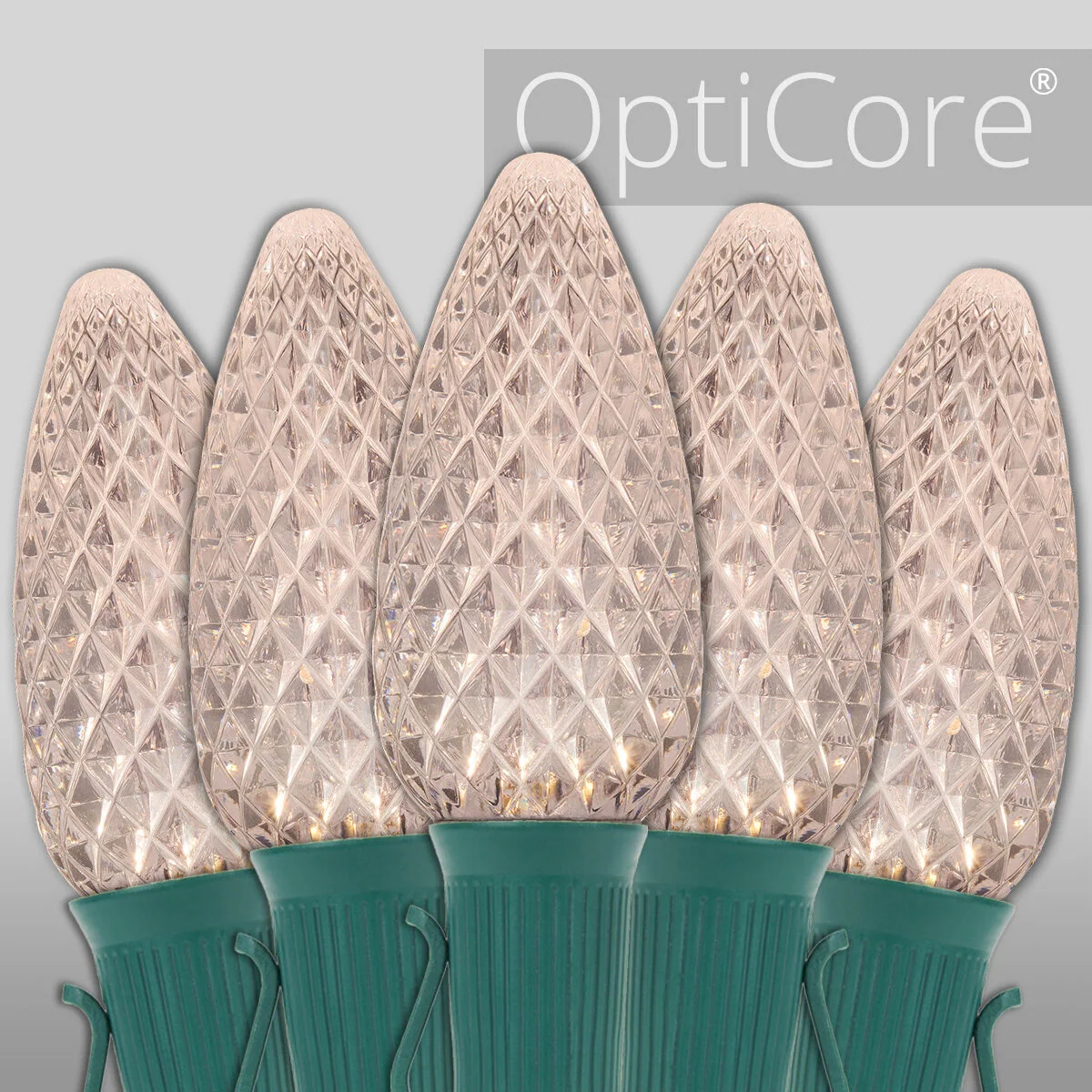
A professional roofline can contain dozens or hundreds of bulbs. Lower per-bulb demand gives the designer more flexibility while staying within product and circuit limits. LED also offers many replaceable C7 and C9 options in warm white, cool white, faceted, smooth, and colored finishes.
The correct comparison uses the specifications on the actual products. Technology does not eliminate the need to calculate connected load, protect outdoor connections, and follow the stringer manufacturer’s instructions.
Why some buyers still choose incandescent
Incandescent bulbs have a familiar filament-style character and remain useful for replacements in a compatible existing system. They also produce more heat and typically draw more watts per bulb than comparable LED Christmas replacements.
If you are maintaining an existing incandescent display, match the bulb shape, base, voltage, wattage, finish, and color. If you are starting a large new roofline, compare the complete operating load before deciding.
Do not create a patchwork roofline
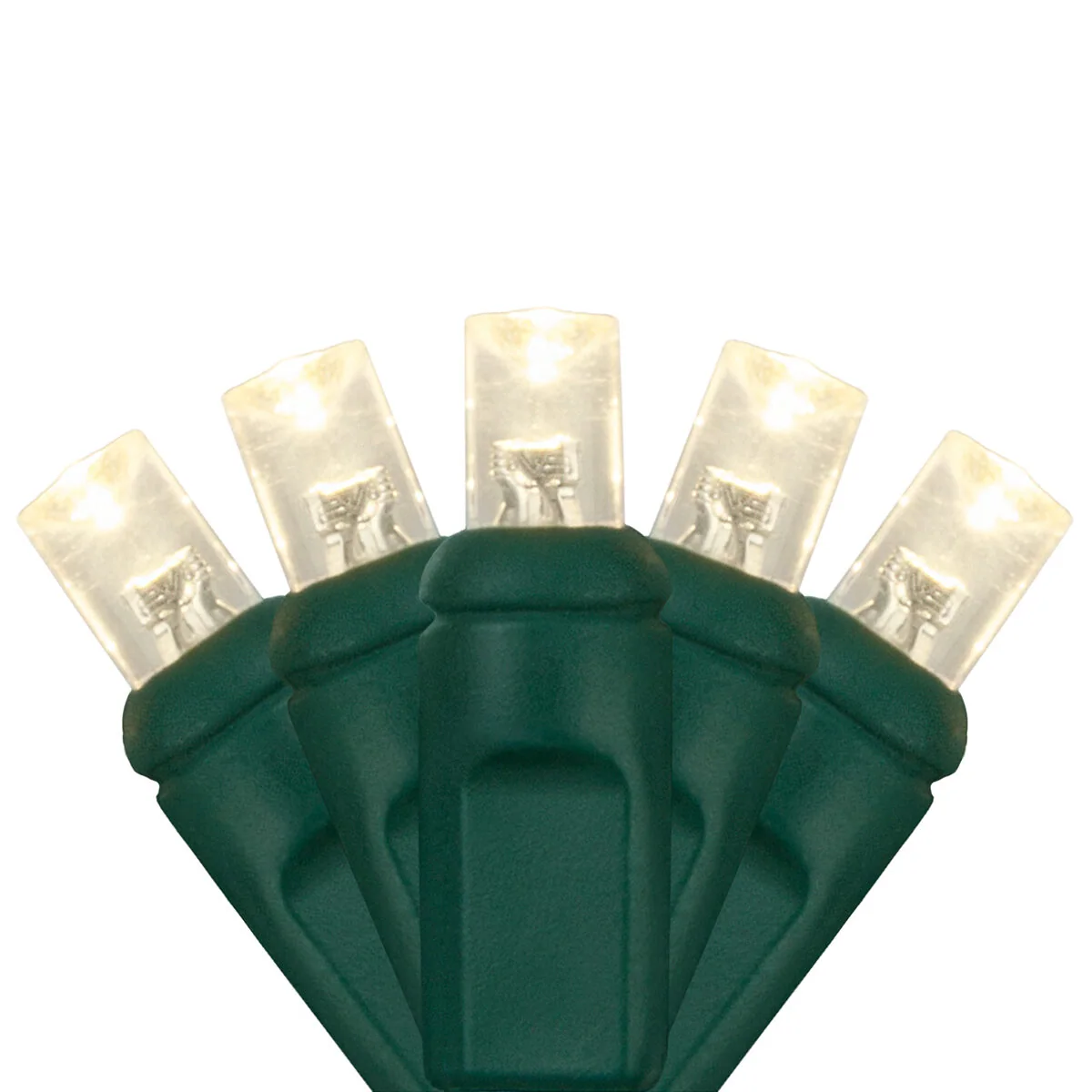
Even when two white bulbs are electrically compatible, their tone, lens, and brightness can differ. A replacement may look acceptable in daylight yet create an obvious patch after dark. Buy enough exact matching spares for the installed product family.
When changing technology or product family, replace a complete connected visual section rather than scattering unmatched bulbs across the roofline.
Quick comparison
| Consideration | LED | Incandescent |
|---|---|---|
| Power demand | Generally lower | Generally higher |
| Large new rooflines | TX Merry Lights’ usual choice | Requires closer load planning |
| Appearance | Many lens and white-tone options | Traditional filament character |
| Replacement strategy | Match exact model and white tone | Match shape, base, voltage, and wattage |
| Heat | Typically lower | Typically higher |
Straight answers
Frequently asked questions
Are LED Christmas lights better for rooflines?
For most new residential rooflines, TX Merry Lights recommends LED because lower power demand makes a large display easier to plan. Product ratings and compatibility still must be verified.
Can LED and incandescent bulbs share a stringer?
Do not assume they can. Follow the stringer and bulb manufacturer instructions, calculate the complete load, and avoid mixing products that create inconsistent brightness or color.
Why do two warm-white LED bulbs look different?
Warm white is a descriptive family, not a guarantee of an identical tone. Lens style, LED design, and product family can all change the appearance.
Should I replace an entire incandescent roofline with LED?
If you want lower demand and a consistent appearance, replacing a complete visual section is usually cleaner than mixing scattered LED replacements into an older incandescent line.