The direct answer
What we recommend
Use rectangular net lights for broad, reasonably uniform shrubs; trunk or column wraps for cylindrical surfaces; and flexible string lights for irregular bushes, branches, railings, and detailed shapes. The fastest product is the one whose dimensions and geometry already match the feature.
Key takeaways
- Measure width, height, and circumference before choosing a net or wrap.
- Net lights create even coverage on uniform shrubs but fit irregular shapes poorly.
- Trunk and column wraps are sized for cylindrical surfaces.
- String lights take longer to place but adapt to complex shapes.
- Match wire color and emitted light color across adjacent features.
Compare products from this guide
Check the listed contents and available options for the lights you choose.
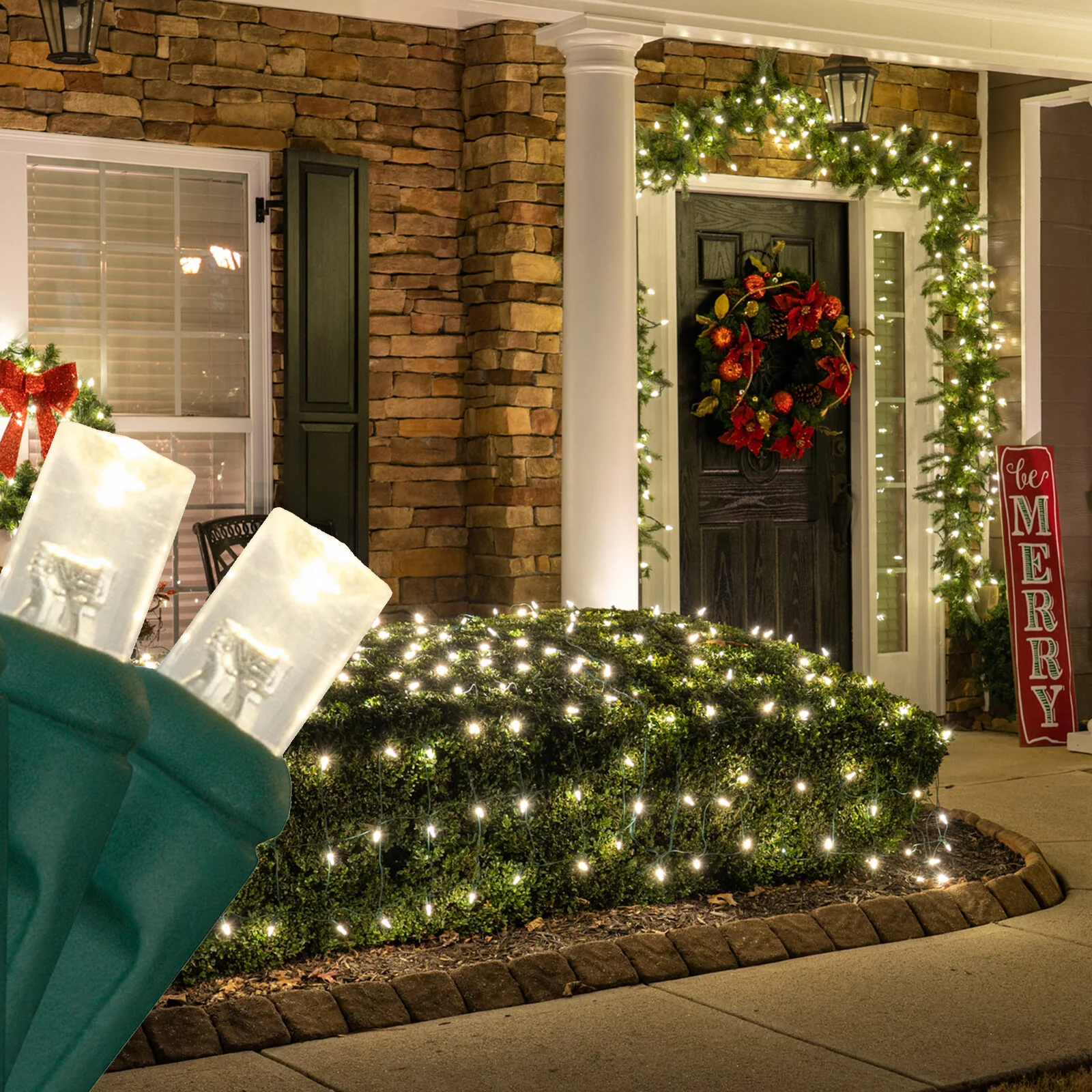
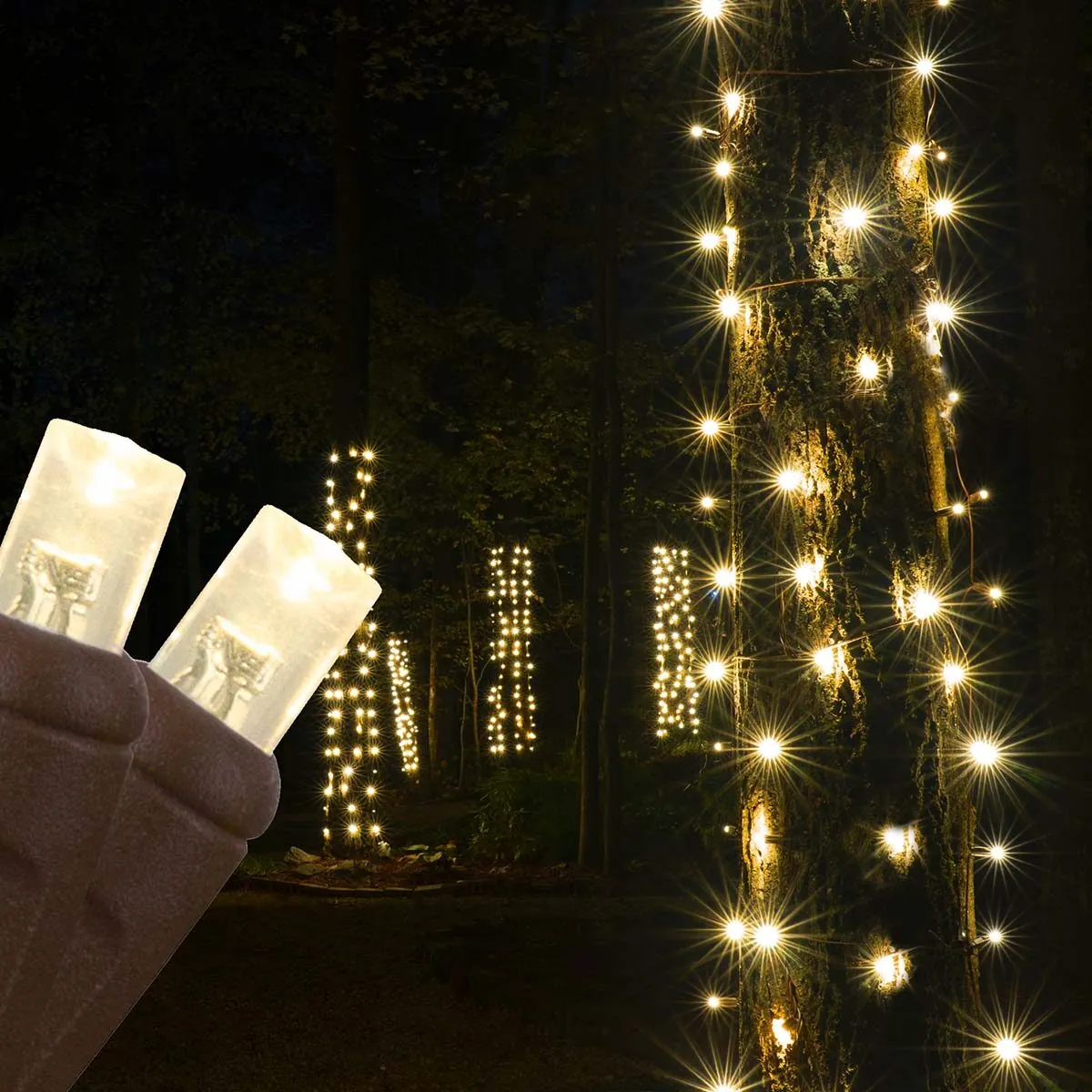
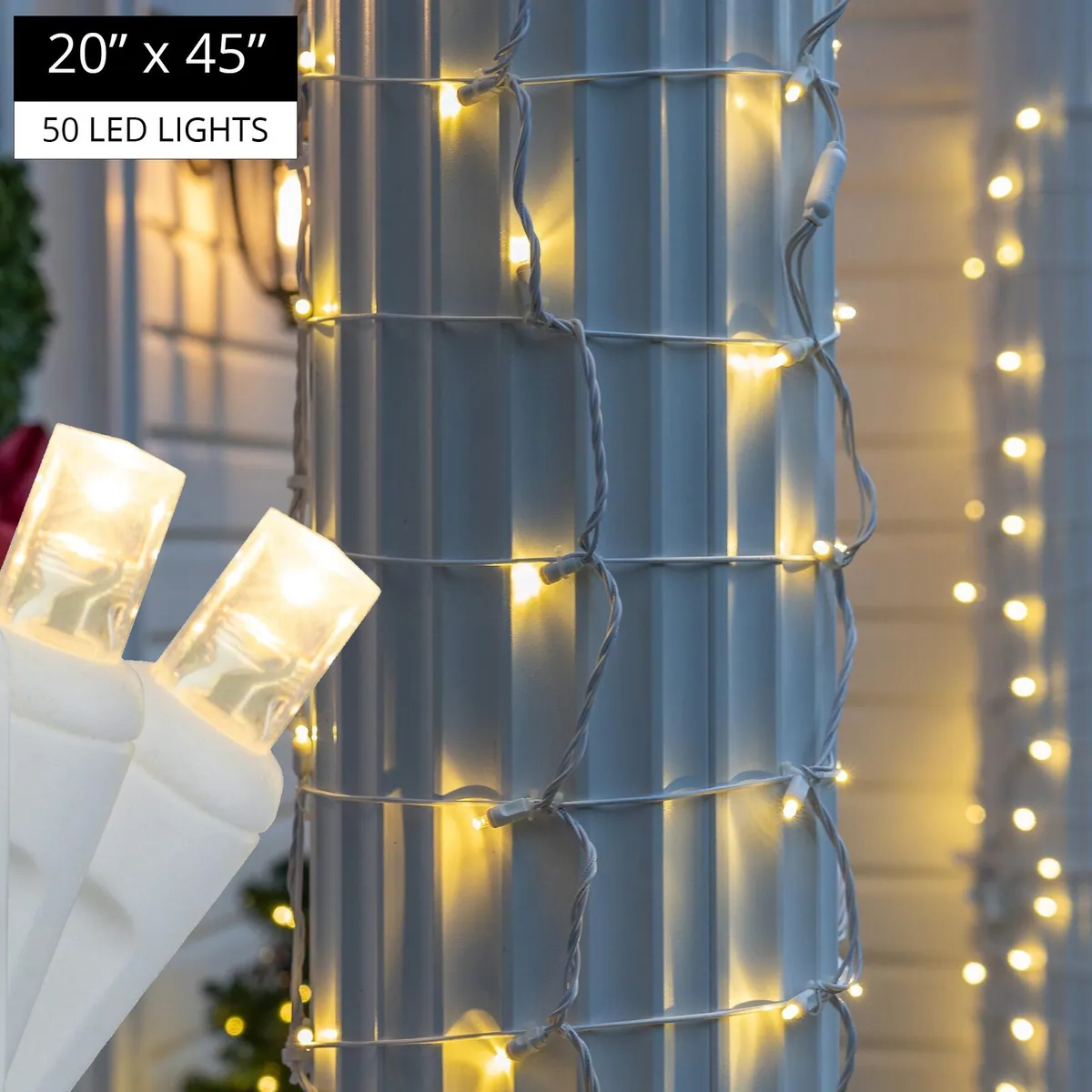
Compare actual wrap sizes before counting lights
The warm white green-wire trunk wrap WG-20949 contains 100 lights and lists a 2-foot by 6-foot net size. The smaller brown-wire StretchNet WG-65543 contains 50 lights and lists 14 inches by 31.5 inches in its specifications. These are different coverage options, not interchangeable packages merely because both use 5mm LEDs.
Measure the circumference where the wrap will sit, plus the height you want to light. For example, a trunk measuring 48 inches around and a desired 24-inch lit height need a wrap orientation and closure that accommodate both measurements. Do not substitute trunk diameter for circumference or assume a stretch range that the manufacturer has not specified. Check the product instructions before deciding how many wraps to connect.
Buy for one measured surface, then add only what it needs
Choose a net or wrap that fits first. String lights are an alternative when the surface cannot be covered neatly with a fixed grid. A second wrap is useful only when your coverage plan needs it; it is not a mandatory accessory.
Mounting materials and an outdoor timer are optional additions based on your surface and power plan. Use the selected product’s connection limits and rated components. Never pull a net tight to force it around an oversized trunk.
Use nets on broad, consistent surfaces
A net distributes bulbs in a fixed grid, which can speed installation and create even spacing. Compare the unstretched dimensions, stretch range where provided, wire color, and connection direction with the actual shrub.
Use wraps on trunks and columns
Trunk and column products are narrower and designed around vertical cylindrical coverage. Measure circumference at multiple heights when the feature tapers, and check whether the selected size can close without excessive tension.
Use strings for irregular or detailed shapes
Strings can follow branches, spiral around railings, or weave through an uneven bush. Plan a consistent spacing pattern and avoid crossing or compressing the wire beyond the product instructions.
Quick comparison
| Format | Best fit | Main measurement |
|---|---|---|
| Net light | Uniform shrub or hedge section | Width and height |
| Trunk wrap | Tree trunk | Circumference and lit height |
| Column wrap | Column or post | Circumference and height |
| String light | Irregular or detailed feature | Complete routing path |
Straight answers
Frequently asked questions
Are net lights better than string lights for bushes?
Net lights are usually faster and more uniform on regularly shaped shrubs. String lights are more adaptable when a bush is irregular, sparse, very small, or larger than the available net dimensions.
Can I use a net light on a tree trunk?
A purpose-built trunk wrap is generally easier to size and align on a cylinder. If considering another format, follow its stated application and do not stretch it beyond the listed range.
How many net lights do I need for a hedge?
Measure the visible width and height, compare those dimensions with the selected net, and plan overlap or transitions. The product dimensions—not bulb count alone—determine coverage.