The direct answer
What we recommend
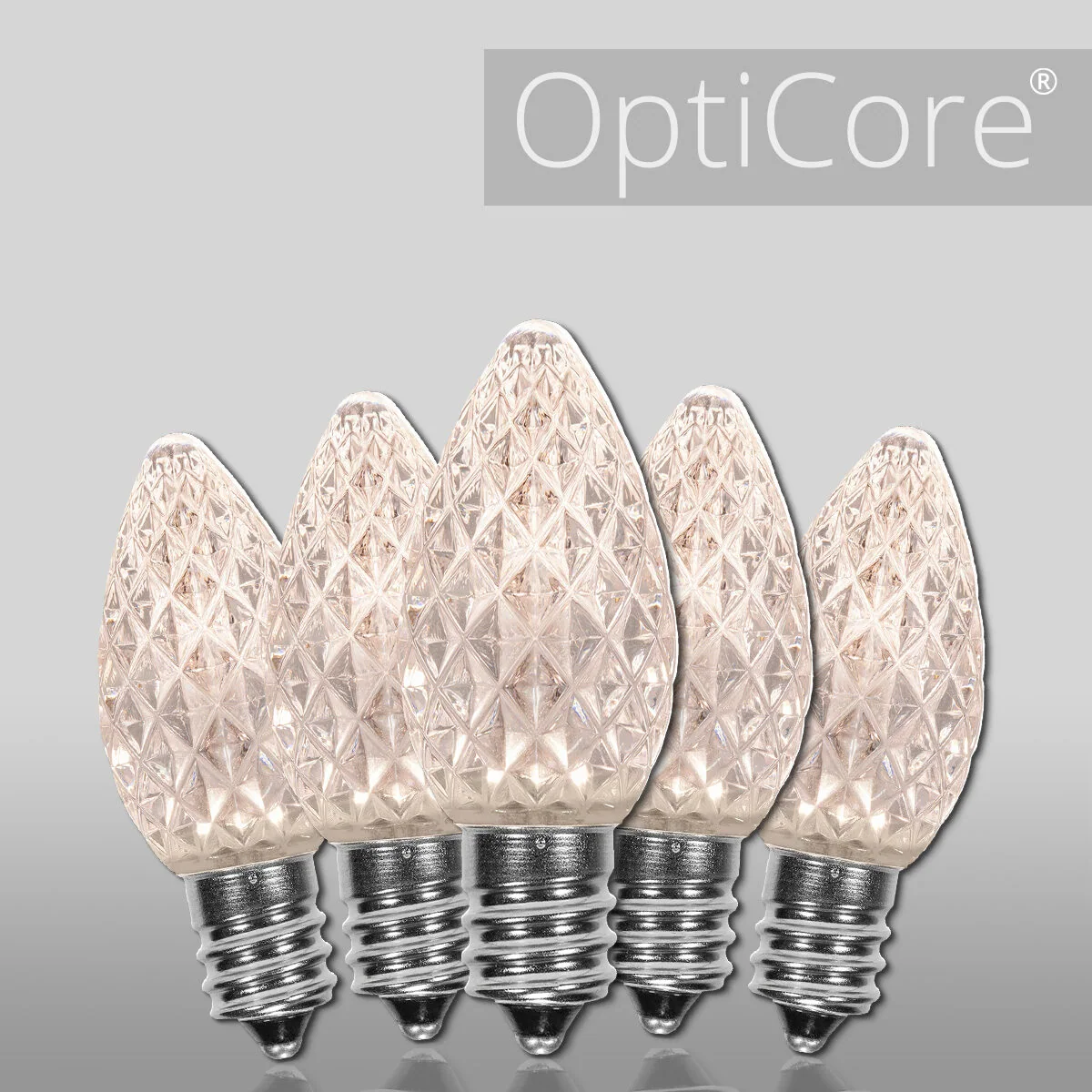
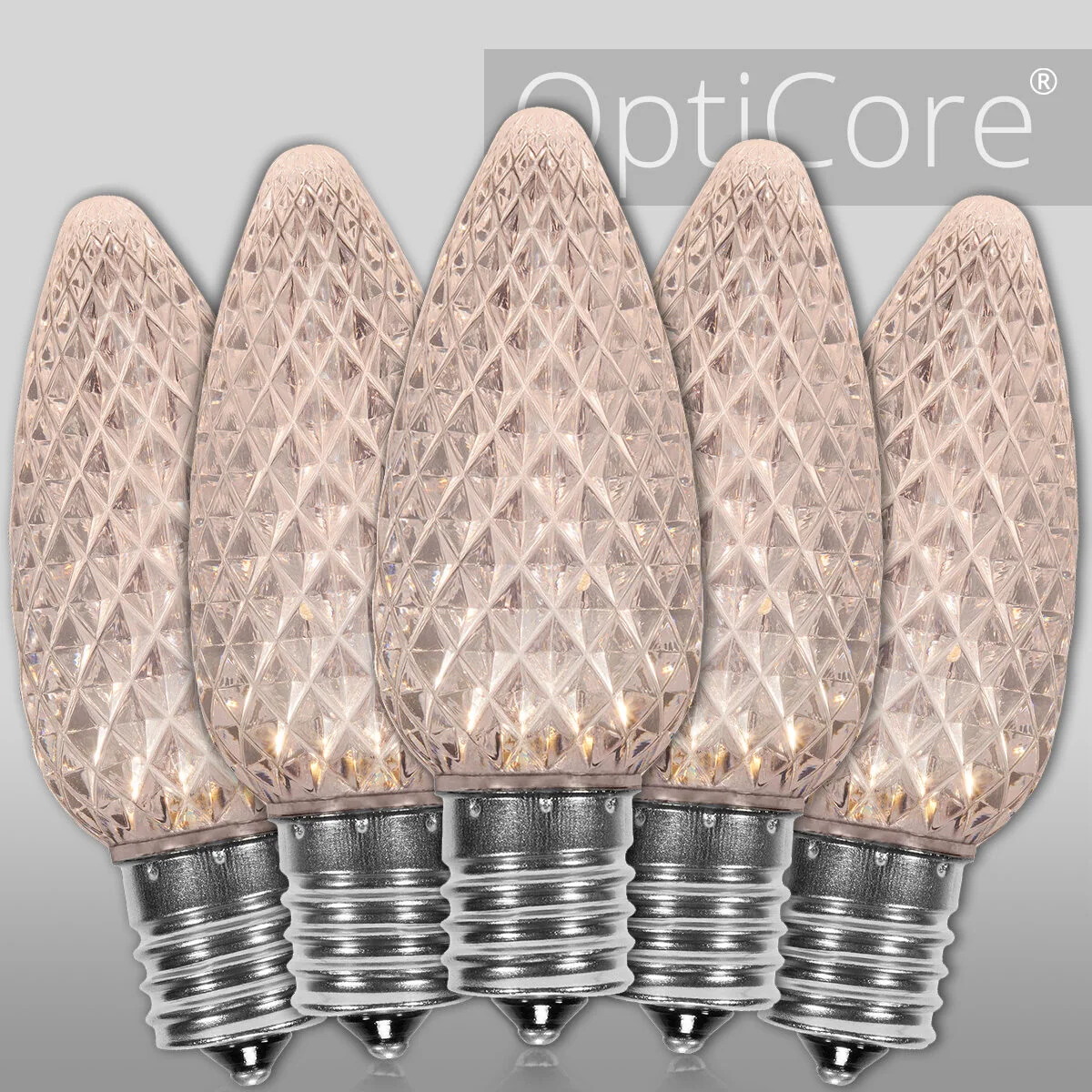
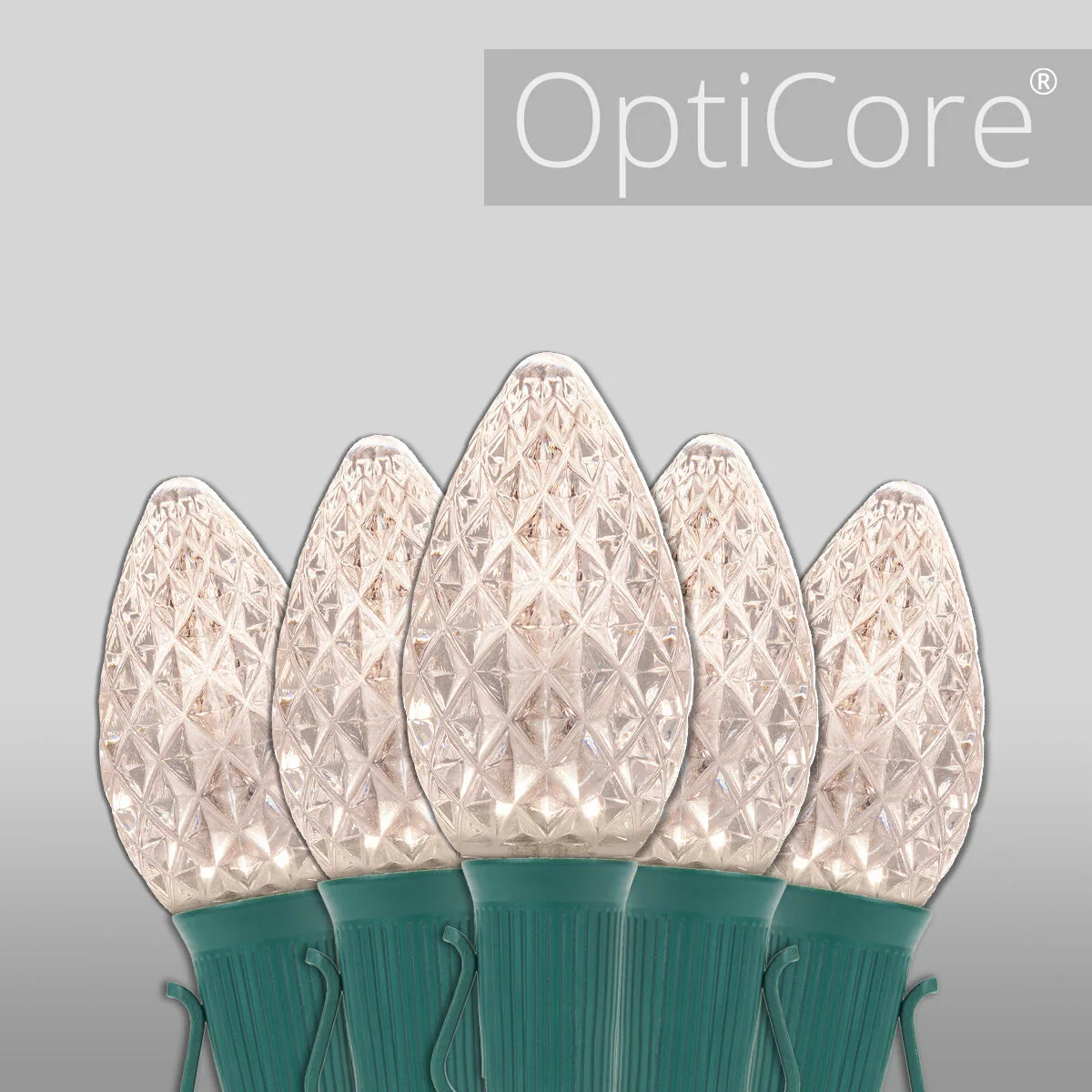
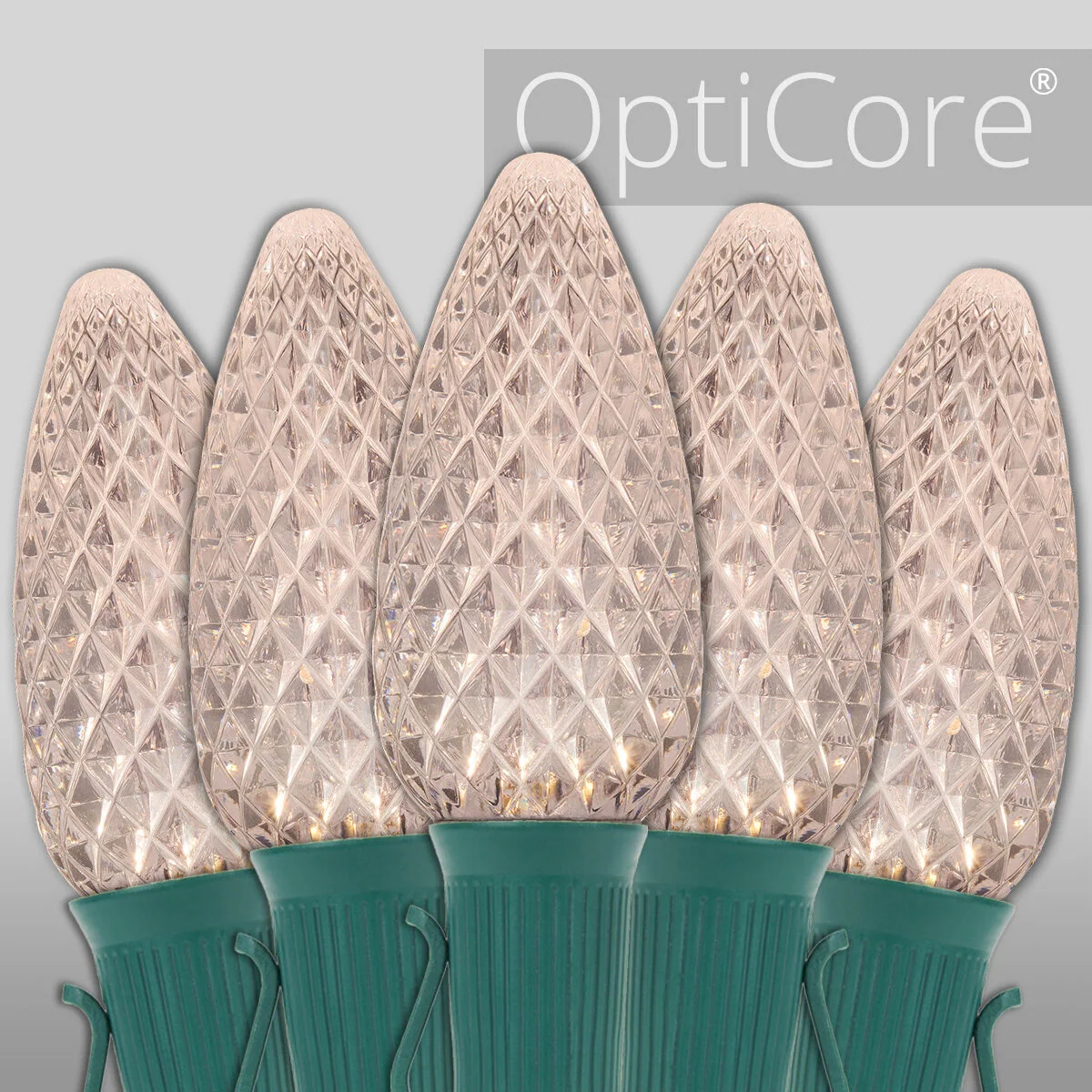
Choose C9 for the bold, professional roofline appearance seen on most full-size homes. Choose C7 when the viewing distance is shorter, the architecture is smaller, or you want a more delicate scale. C7 and C9 bulbs normally use different sockets—E12 for C7 and E17 for C9 in the systems shown here—so the bulbs and stringers are not interchangeable.
Key takeaways
- C9 is larger and more visible from the street.
- C7 creates a smaller, more delicate outline.
- C7 and C9 systems use different socket sizes in our featured products.
- Select the bulb size before purchasing socket wire, clips, or replacement bulbs.
The visual difference
C9 bulbs create larger points of light and hold their presence across wide setbacks, two-story elevations, and broad rooflines. C7 bulbs are visibly smaller. They can look proportionate on compact structures, porch details, windows, and closer-view applications, but they do not create the same scale on a large roofline.
Because most TX Merry Lights customers requesting a professional residential outline want strong street visibility, C9 is our usual recommendation. This is a design choice, not a claim that C7 is inferior; the correct scale depends on the building and viewing distance.
Socket compatibility is the hard boundary
Bulb shape and socket base are separate specifications. In the product systems below, C7 bulbs pair with E12 candelabra sockets while C9 bulbs pair with E17 intermediate sockets. A C7 bulb should not be forced into a C9 stringer, and a C9 bulb will not fit a C7 stringer.
Check the product page for both bulb shape and socket type. If you already own stringer wire, identify its socket specification before ordering replacement bulbs.
Where each size works best
Use C9 when the roofline is the main visual feature, the home is viewed from across the street, or the architecture needs a strong outline. Use C7 where the display is seen closer, the surface is smaller, or a lighter visual scale is intentional.
Avoid mixing C7 and C9 randomly along one connected architectural line. If both appear in the same display, assign them distinct roles—for example, C9 on the roofline and C7 on a smaller secondary feature.
Quick comparison
| Feature | C7 | C9 |
|---|---|---|
| Visual scale | Smaller and more delicate | Larger and more prominent |
| Featured socket | E12 candelabra | E17 intermediate |
| Typical role | Smaller details and closer viewing | Primary home rooflines |
| Street visibility | More subtle | Stronger at normal residential setbacks |
| TX Merry Lights roofline preference | Situational | First recommendation for most homes |
Straight answers
Frequently asked questions
Which is bigger, C7 or C9?
C9 is the larger bulb and creates a more prominent point of light than C7.
Can C7 bulbs fit a C9 stringer?
Not in the systems featured here. C7 products use E12 sockets and C9 products use E17 sockets. Confirm both specifications before buying.
Do professional installers use C7 or C9?
Both have uses, but TX Merry Lights most often specifies C9 for a professional residential roofline because it remains clear and visible from the street.
Can C7 and C9 be used in the same display?
Yes, when they serve separate design roles and use their own compatible stringers. Keep one size consistent along each continuous architectural line.