The direct answer
What we recommend
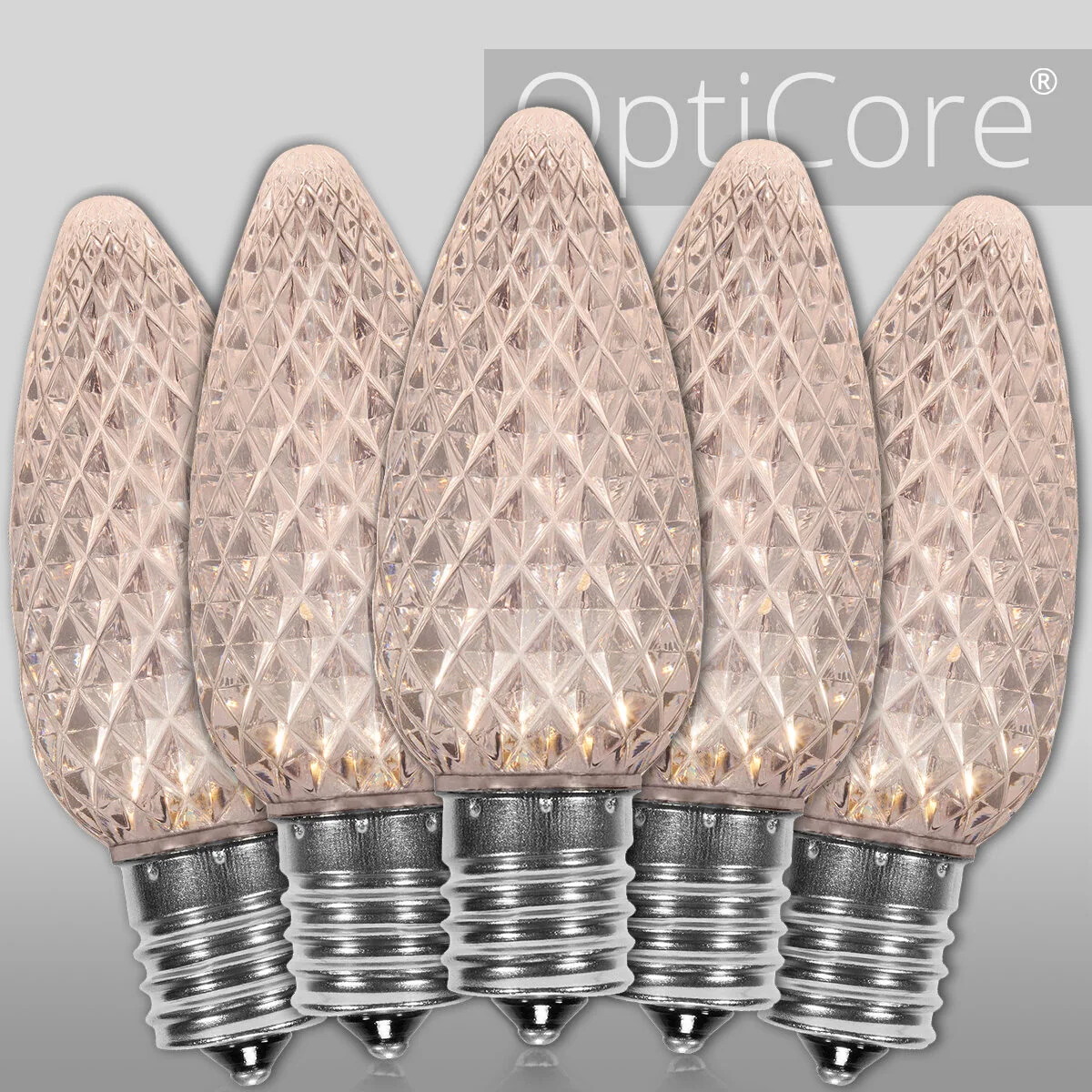
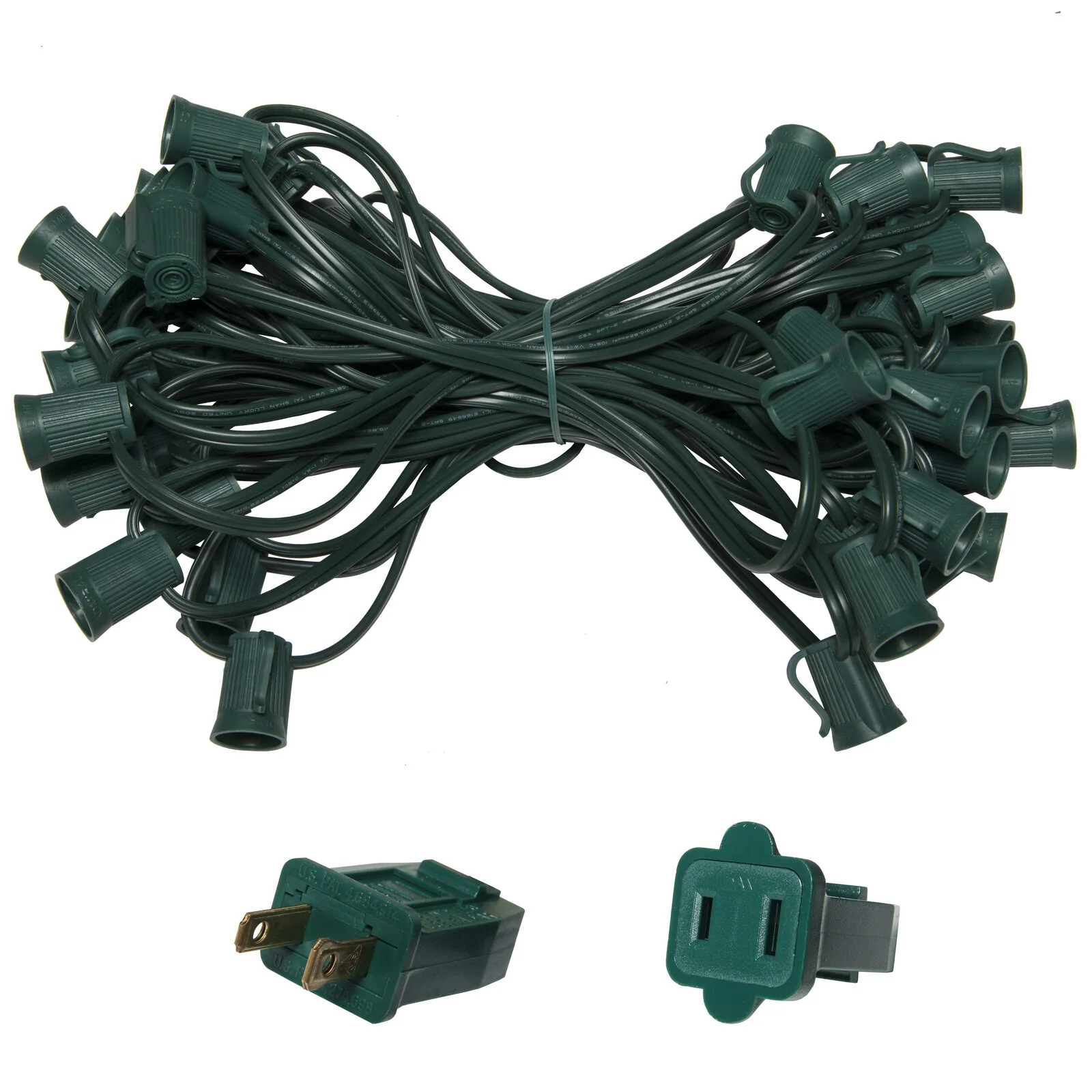
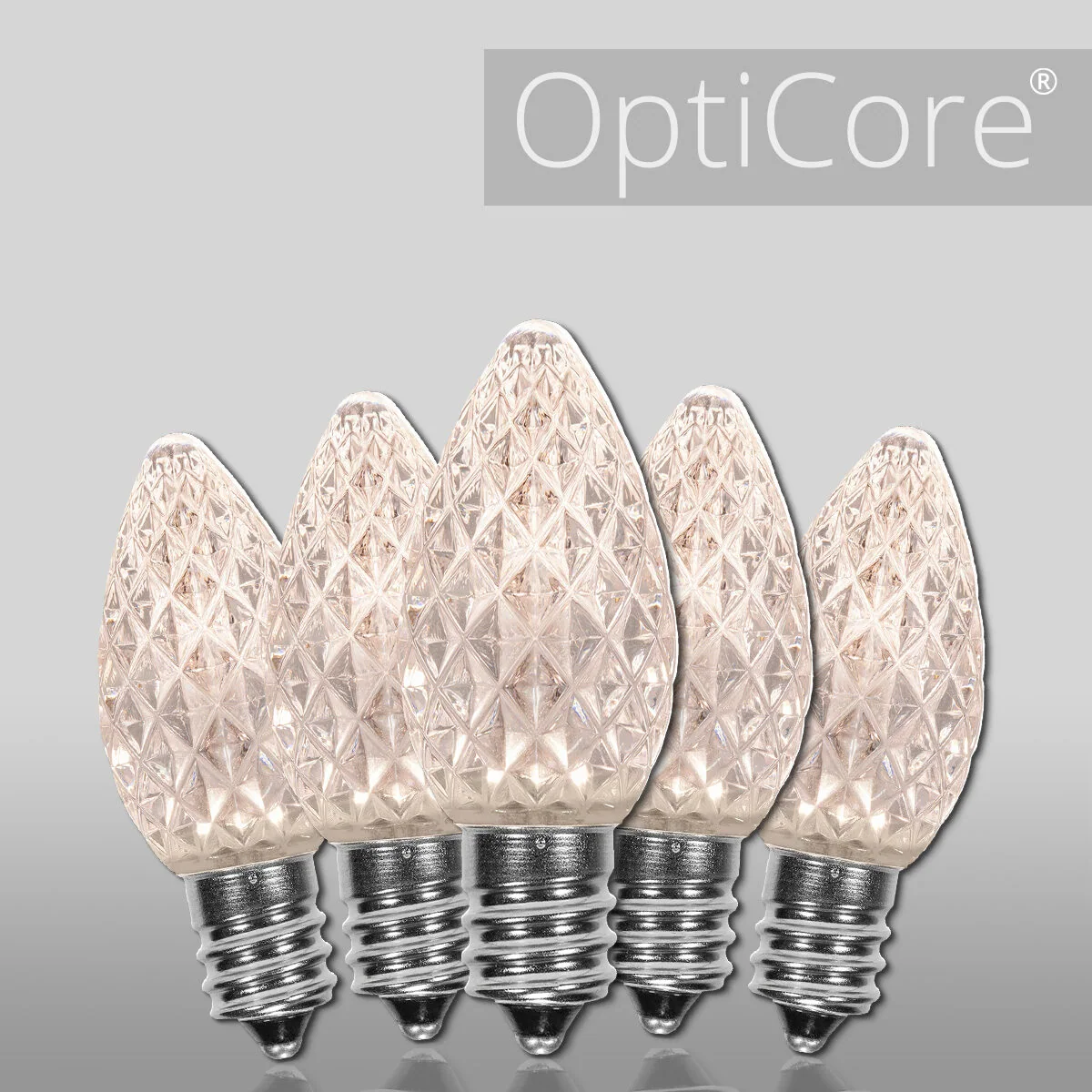
A Christmas bulb is compatible only when its base and electrical specifications match the stringer. For the featured systems, C7 bulbs use E12 candelabra sockets and C9 bulbs use E17 intermediate sockets. Also confirm voltage, allowed wattage, application rating, socket count, spacing, wire type, and connection style before purchase.
Key takeaways
- Match the socket base first: E12 and E17 are different sizes.
- Bulb shape alone does not prove electrical compatibility.
- Check maximum stringer wattage against the complete installed bulb load.
- Use products rated for the actual indoor or outdoor environment.
- Clips must fit both the bulb/stringer and the mounting surface.
The six specifications to compare
Start with socket type, then confirm rated voltage, bulb wattage, stringer maximum wattage, indoor/outdoor application, and connection details. Socket spacing and wire color are design decisions, but they also affect quantity planning and how the unlit wire disappears against the structure.
Product names can be shortened in search results, so open the full product page and read the specifications. When an existing stringer has no readable markings and its socket cannot be confidently identified, replace or professionally inspect the system instead of guessing.
- Socket base: E12 candelabra or E17 intermediate
- Bulb and stringer voltage
- Bulb wattage multiplied by installed bulb count
- Maximum wattage and amperage listed for the stringer
- Indoor/outdoor application rating
- Wire gauge, wire type, plug connection, and socket spacing
C7 and C9 are separate systems
The featured 100-foot C7 stringer uses E12 candelabra sockets. The featured 100-foot C9 stringer uses E17 intermediate sockets. Their similar green wire and 12-inch spacing do not make the sockets interchangeable.
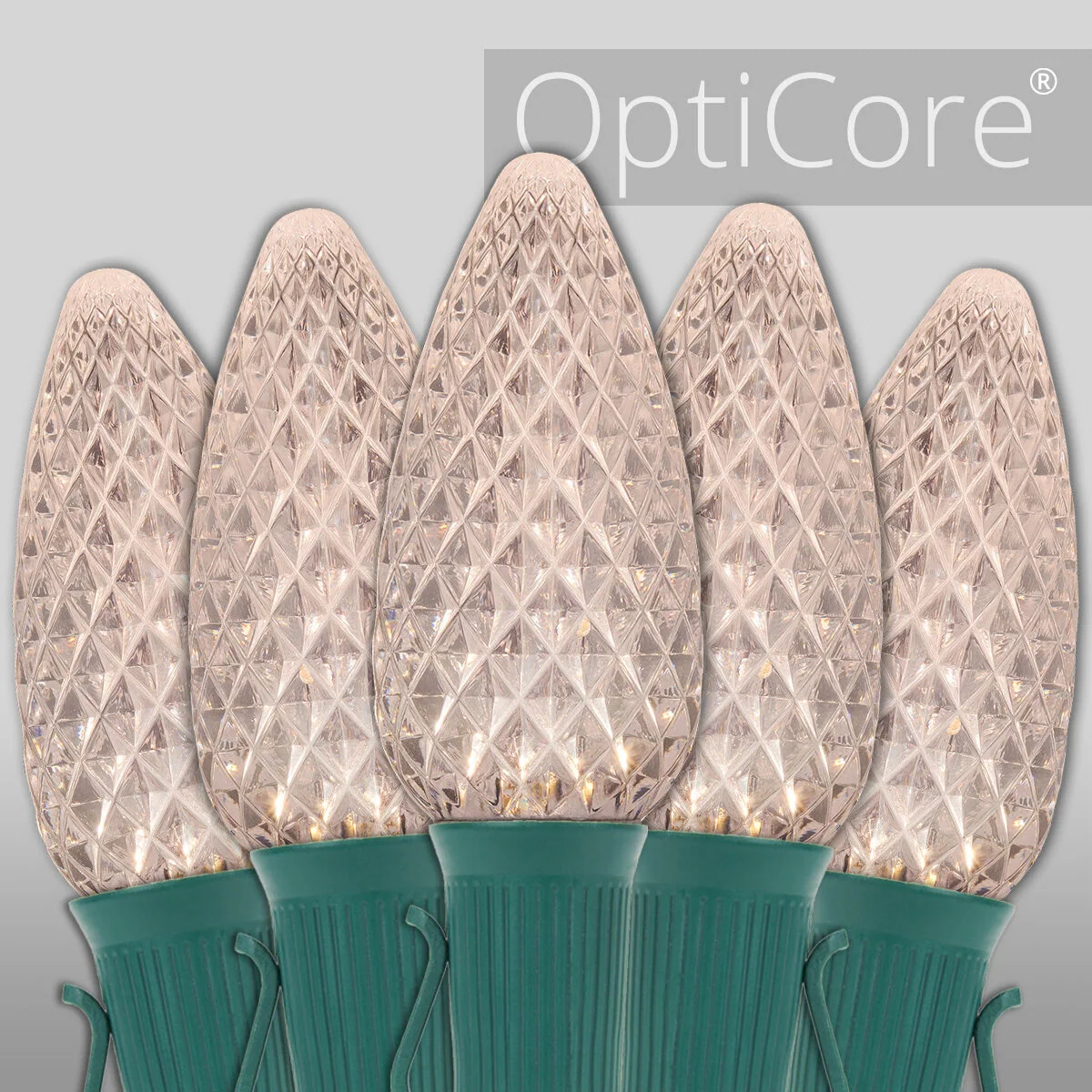
Build a product list around one system at a time. For a C9 roofline, select C9/E17 bulbs, a C9/E17 stringer, and clips listed for C9. For a C7 project, repeat the process with C7/E12 components.
Calculate the load before installation
Multiply the wattage of one bulb by the number of bulbs on the run. Compare that total with every applicable limit stated by the stringer and manufacturer. Do not treat the breaker rating as the only limit; string wire, plugs, connectors, and product instructions can impose lower limits.
LED bulbs generally make it easier to keep a large display’s demand lower, but every actual product still needs to be checked. Never mix components based solely on a general assumption about LED efficiency.
Straight answers
Frequently asked questions
Will any C9 bulb fit any C9 stringer?
No. C9 describes the bulb shape, while the base and electrical ratings determine compatibility. Confirm the bulb base, socket type, voltage, wattage, and application rating.
What is the difference between E12 and E17?
They are different screw-base diameters. E12 is commonly paired with C7 bulbs, and E17 is commonly paired with C9 bulbs in the products featured here.
How do I know how many watts are on a stringer?
Multiply each bulb’s listed wattage by the number of installed bulbs, then compare the result with the stringer’s stated maximum wattage and all manufacturer limits.
Can I use an indoor stringer outside under an eave?
Use only products specifically rated for the intended outdoor application. An overhang does not automatically convert an indoor-only product into an outdoor-rated one.