The direct answer
What we recommend
Use 4- or 6-inch spacing for mini lights where closer points of light create dense coverage. Twelve-inch spacing is a common professional C9 roofline baseline because it is approximately one socket per linear foot. Fifteen-inch spacing produces a more open roofline and fewer sockets over the same distance. Compare like product types before using spacing as a buying decision.
Key takeaways
- Closer spacing means more lights over the same measured distance.
- Four- and six-inch spacing commonly describe mini-light strings.
- Twelve- and fifteen-inch spacing commonly appear on C7/C9 stringers and spools.
- Connected roof sections look best with one consistent spacing.
- Spacing changes electrical load as well as appearance.
Compare products from this guide
Check the listed contents and available options for the lights you choose.
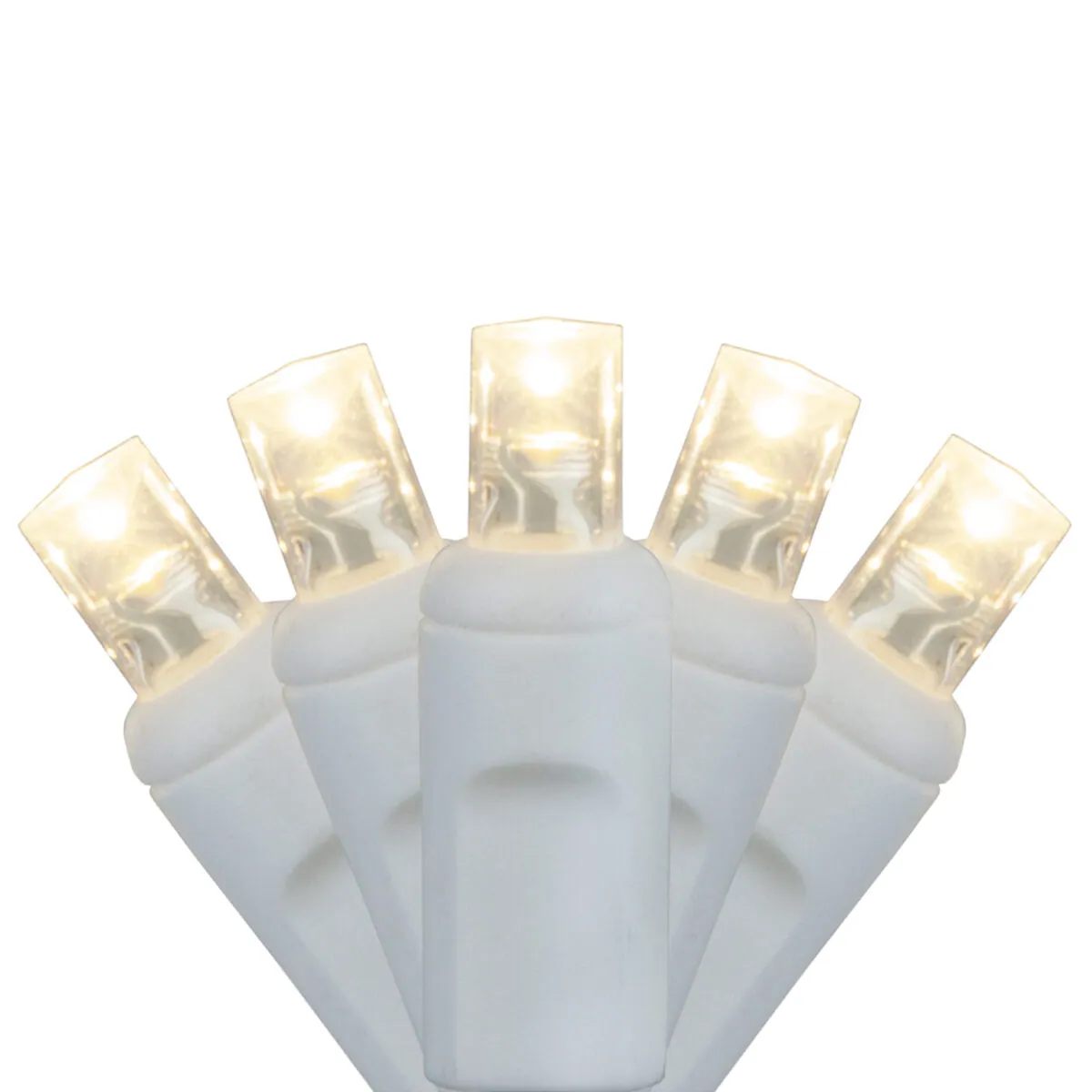
15 5mm Warm White LED Christmas Lights, White Wire, 4" Spacing
Includes 1 light set
$6.99
View product & options →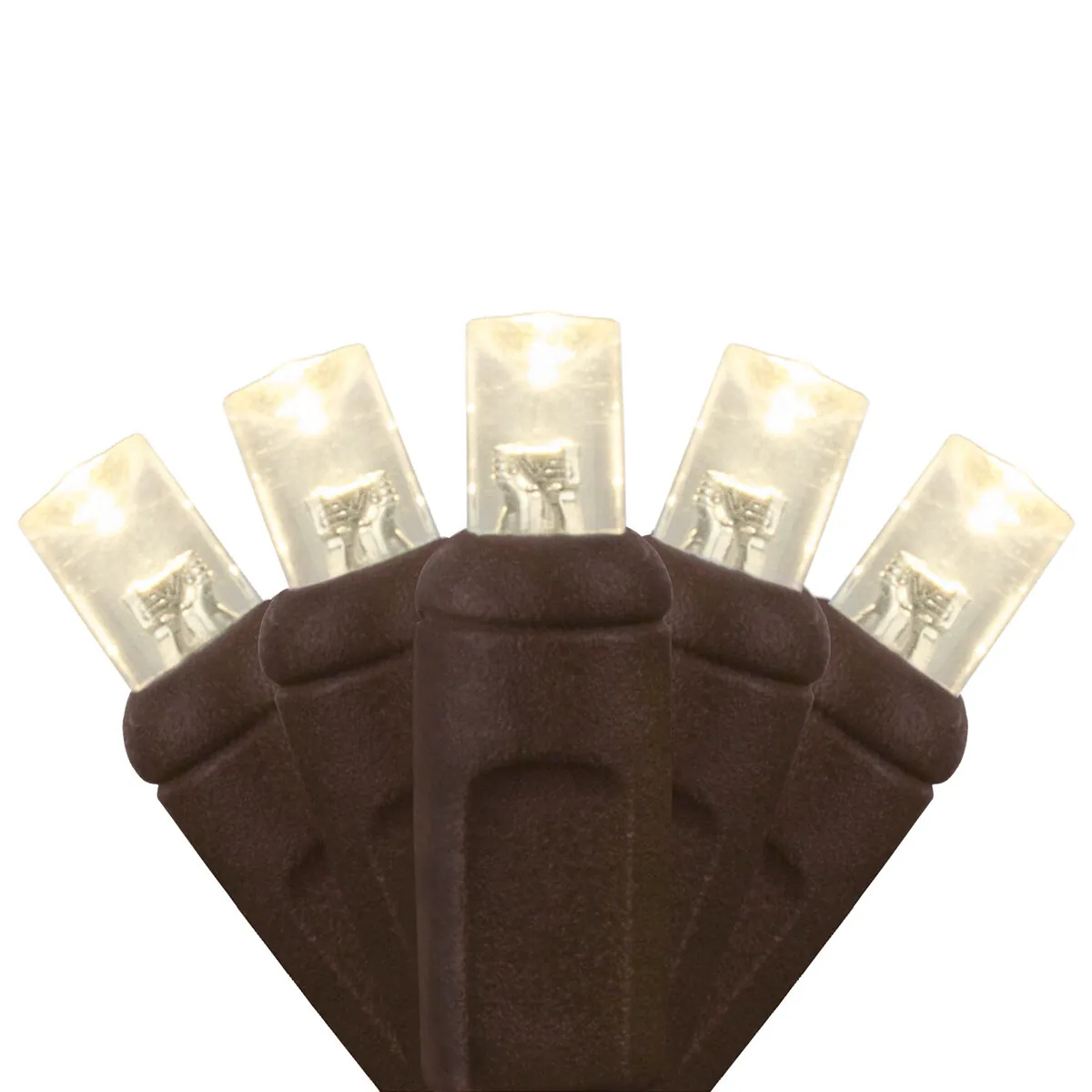
50 5mm Warm White LED Christmas Lights, Brown Wire, 6" Spacing
Includes 1 light set
$16.99
View product & options →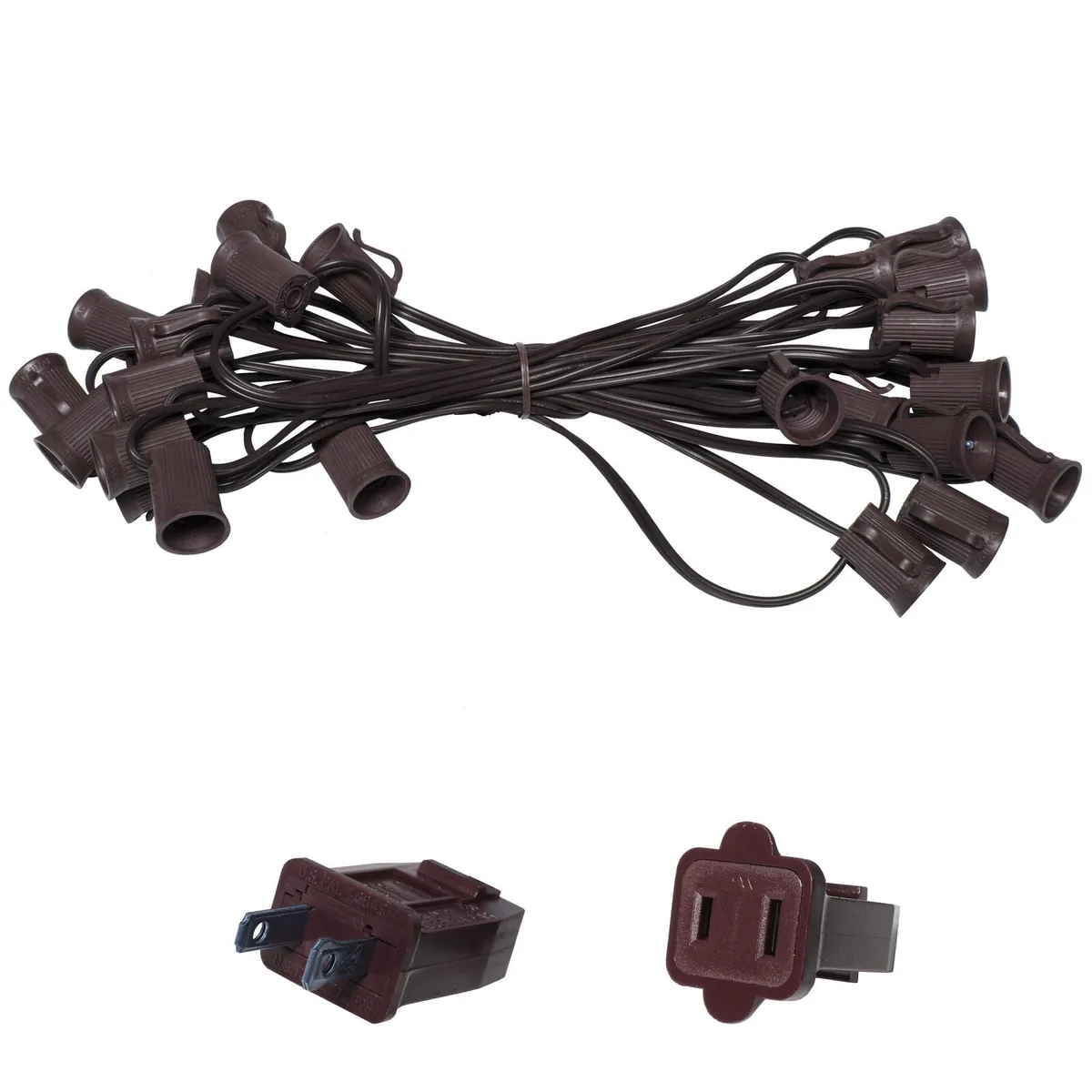
Convert spacing into an approximate count
For a rough material allowance, multiply the measured feet by 12 and divide by spacing in inches, rounding up. The table below uses this convention for the illuminated run only: it excludes unlit leads, tails and transitions. It is not an exact count of bulbs between two endpoints.
For positions starting exactly at one endpoint, the number that fits within a run is floor(length in inches ÷ spacing) + 1. A light lands exactly at the far endpoint only when the length is a whole multiple of spacing. For example, 50 feet at 12-inch spacing has 50 intervals and 51 endpoint-inclusive positions. A factory 50-socket stringer still has 50 sockets: its listed count, lighted length and lead/tail measurements control what you receive.
Use the same spacing on connected architecture
Changing spacing at a nearby peak or eave creates a visible rhythm change after dark. If sections meet visually, specify them as one system unless the transition is intentional.
Do not compare spacing without product type
A four-inch mini LED set and a twelve-inch C9 stringer serve different purposes. Compare bulb size, lighted length, socket type, voltage, and application alongside spacing.
Turn a 100-foot roofline into a shopping list
At 12-inch spacing, begin with an allowance of about 100 sockets, then lay out each separate run and check endpoints. Choose an E17 C9 stringer with the required listed socket count, matching E17 bulbs, and clips suited to the mounting surface. Add unlit extensions and any spare bulbs separately. An empty stringer does not include bulbs; a complete light set must explicitly list what is included.
For trees or greenery, measure the actual wrapped path rather than using the roofline table as a tree-coverage estimate. A 70-light SoftTwinkle set with 4-inch spacing has 69 gaps between its first and last lights, or 23 feet; total cord length also includes its lead and tail. Do not cut pre-wired mini-light sets to fit. Check the exact manufacturer's connection and electrical limits for every product.
Quick comparison
| Measured run | Mini lights: 4 / 6 inches | C9 sockets: 12 / 15 inches |
|---|---|---|
| 25 feet | 75 / 50 | 25 / 20 |
| 50 feet | 150 / 100 | 50 / 40 |
| 100 feet | 300 / 200 | 100 / 80 |
| 150 feet | 450 / 300 | 150 / 120 |
Straight answers
Frequently asked questions
Is 12-inch spacing best for C9 Christmas lights?
It is a common professional residential choice because the rhythm is easy to read and material planning is straightforward. Larger architecture or a different visual preference may use wider spacing.
Does closer spacing make Christmas lights brighter?
It places more light sources in the same distance, which usually looks denser and brighter. Actual brightness also depends on the bulb and product family.
Can I connect 12-inch and 15-inch stringers?
Only connect products the manufacturer identifies as compatible. Even when electrical compatibility exists, the spacing change will be visible across an uninterrupted roofline.